🔧 DTH Hammer Structure Explained — How It Works
A DTH (Down-The-Hole) hammer may look simple from the outside, but inside it is a precisely engineered percussion system designed to deliver powerful impact energy directly to the drill bit.
Understanding its structure helps explain why high-quality hammers deliver better drilling efficiency and longer service life.
⚙️ Main Components of a DTH Hammer
1️⃣ Top Sub
Connects the hammer to the drill pipe and allows compressed air to enter the hammer system.
2️⃣ Check Valve
Prevents debris, water, and cuttings from flowing back into the hammer.
3️⃣ Air Distributor
Controls the airflow that drives the piston movement.
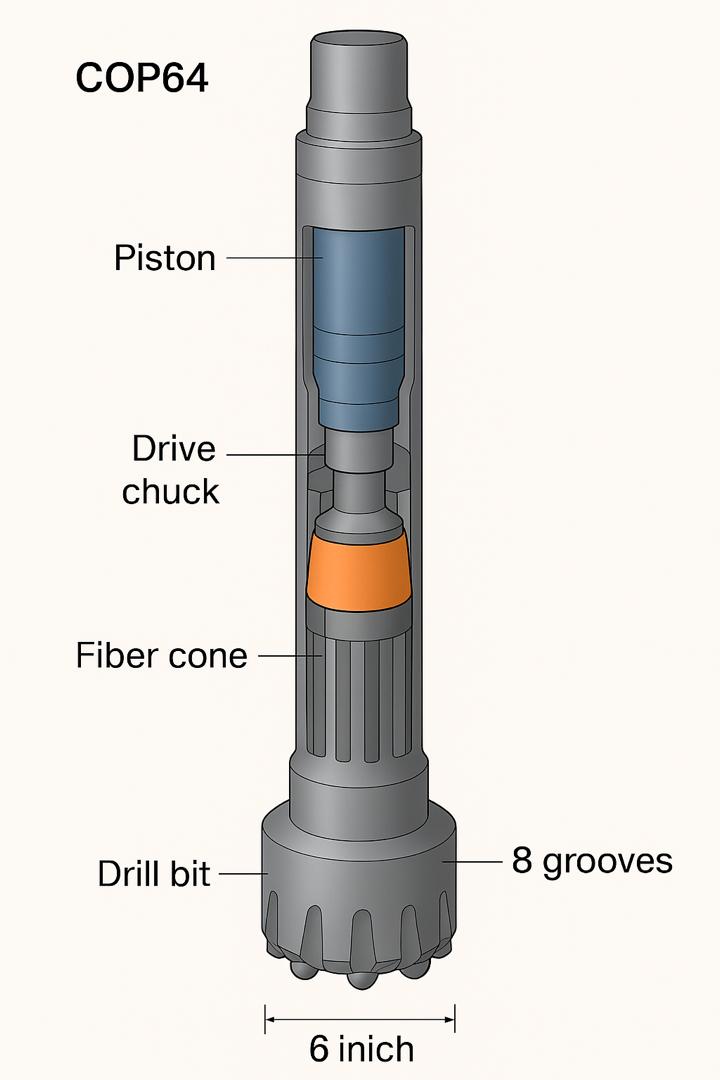
4️⃣ Piston
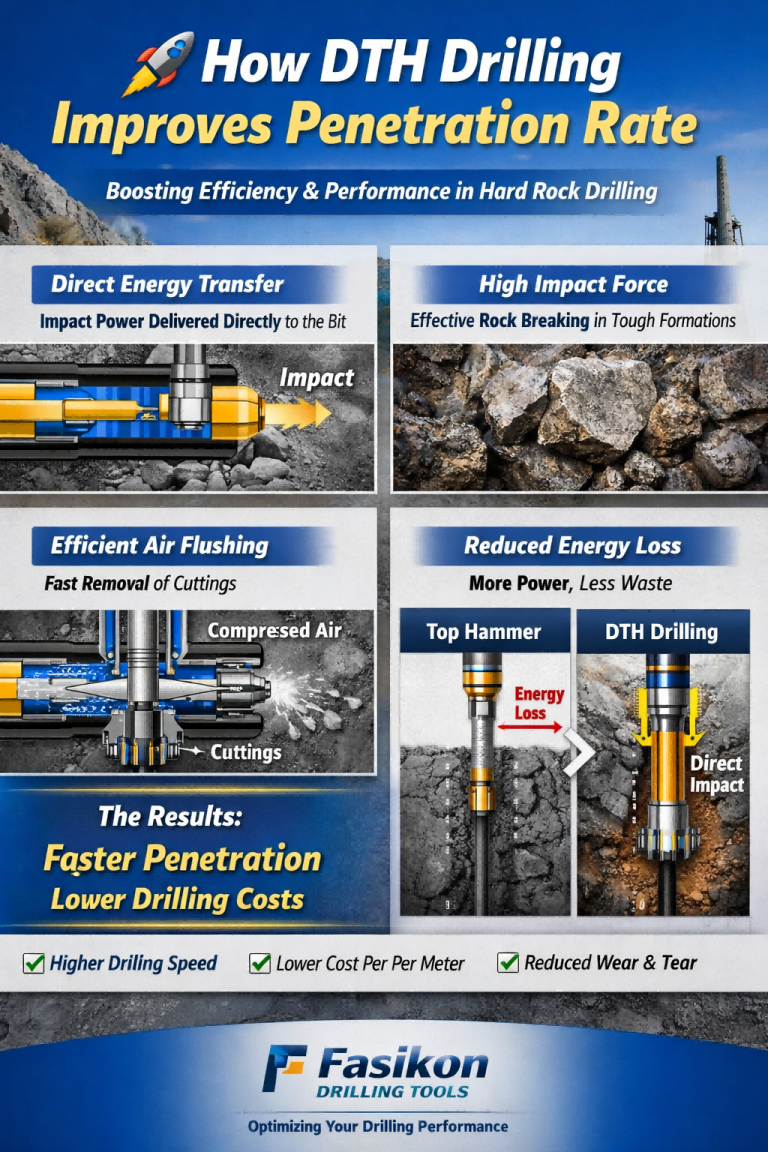
The core impact component. It moves up and down at high frequency, transferring energy directly to the drill bit.
5️⃣ Cylinder / Hammer Body
Provides the chamber where the piston moves and maintains structural strength under high pressure.
6️⃣ Bit Retaining System
Holds the drill bit securely while allowing easy replacement.
🚀 Why Hammer Design Matters
A well-designed DTH hammer provides:
✔ Efficient energy transfer
✔ Stable impact frequency
✔ Reduced internal wear
✔ Higher drilling penetration rates
At Fasikon Drilling Tools, we focus on optimizing hammer structure to deliver reliable performance in mining, quarrying, and water well drilling projects.
If you’re evaluating DTH hammer options or optimizing drilling efficiency, feel free to connect.