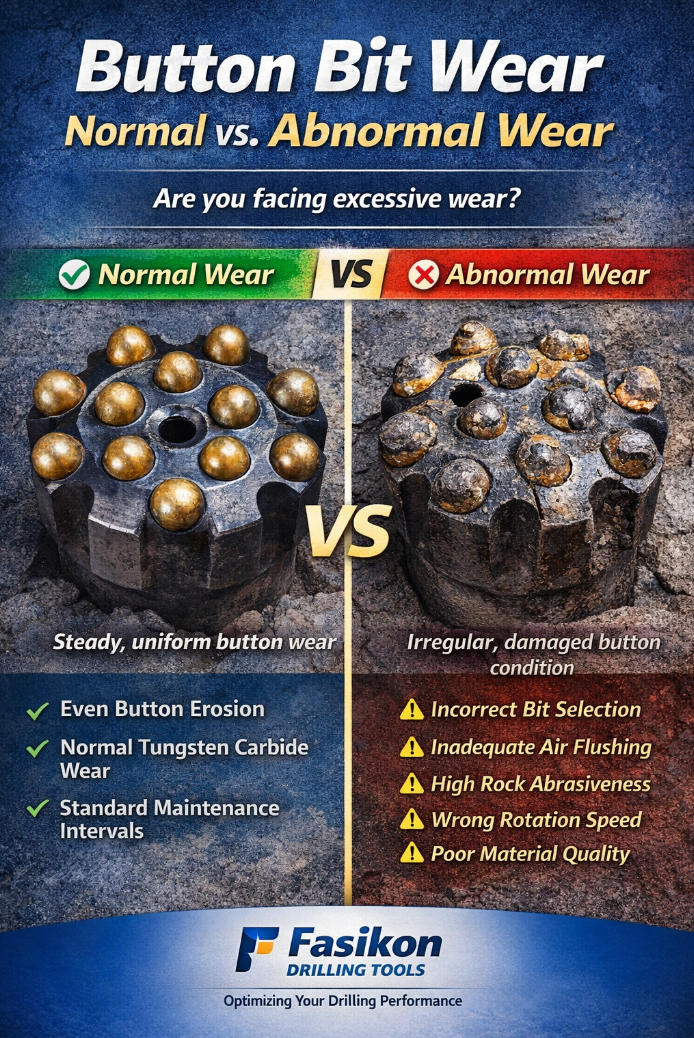
Button Bit Wear — Common Reasons & How to Reduce It
🔩 Button Bit Wear — Common Reasons & How to Reduce It
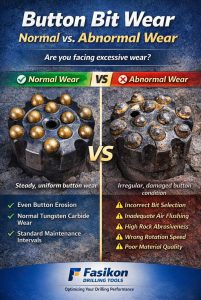
Premature wear of button bits is one of the most common challenges in DTH drilling.
It not only reduces drilling efficiency but also increases tool consumption and overall project cost.
So what really causes button bit wear?
⚠️ 1️⃣ Incorrect Rock Matching
Using the wrong bit design for the formation is a major cause of wear.
- Hard & abrasive rock → requires spherical buttons
- Softer formations → may use ballistic buttons
Wrong selection = faster wear and reduced bit life.
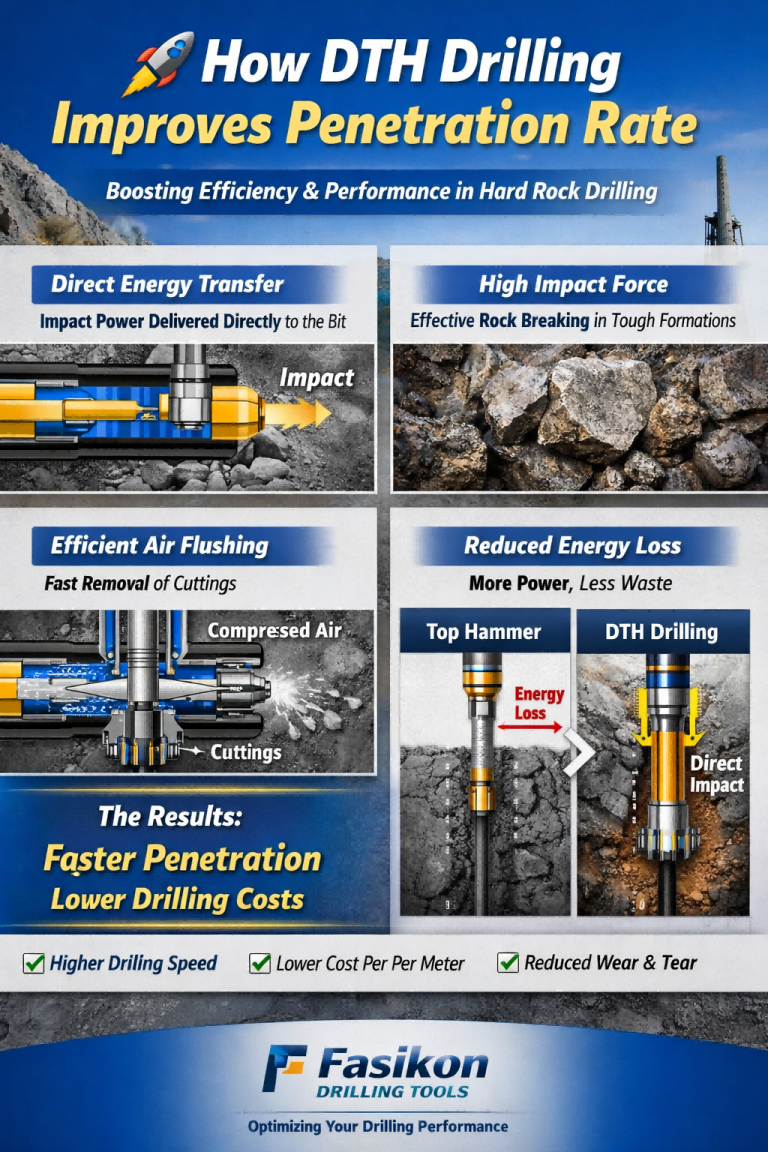
⚙️ 2️⃣ Insufficient Air Flushing
Poor flushing leads to:
❌ Cuttings accumulation
❌ Regrinding of rock fragments
❌ Increased abrasion on buttons
Proper air flow is critical for maintaining drilling efficiency.
🔄 3️⃣ Improper Rotation Speed
Too high rotation speed causes:
- Excessive friction
- Uneven button wear
Too low speed reduces drilling efficiency.
Balance is key.
🪨 4️⃣ High Abrasiveness of Rock
Quartz-rich formations and hard granite significantly increase wear rate.
In such conditions:
✔ Higher-grade carbide is required
✔ Reinforced bit design is recommended
🔧 5️⃣ Poor Heat Treatment & Material Quality
Low-quality carbide or improper heat treatment leads to:
- Cracking
- Chipping
- Rapid wear
Material quality directly determines bit lifespan.
💡 How to Reduce Button Wear
✔ Match bit design to formation
✔ Optimize air pressure and flushing
✔ Control rotation speed
✔ Use high-quality carbide buttons
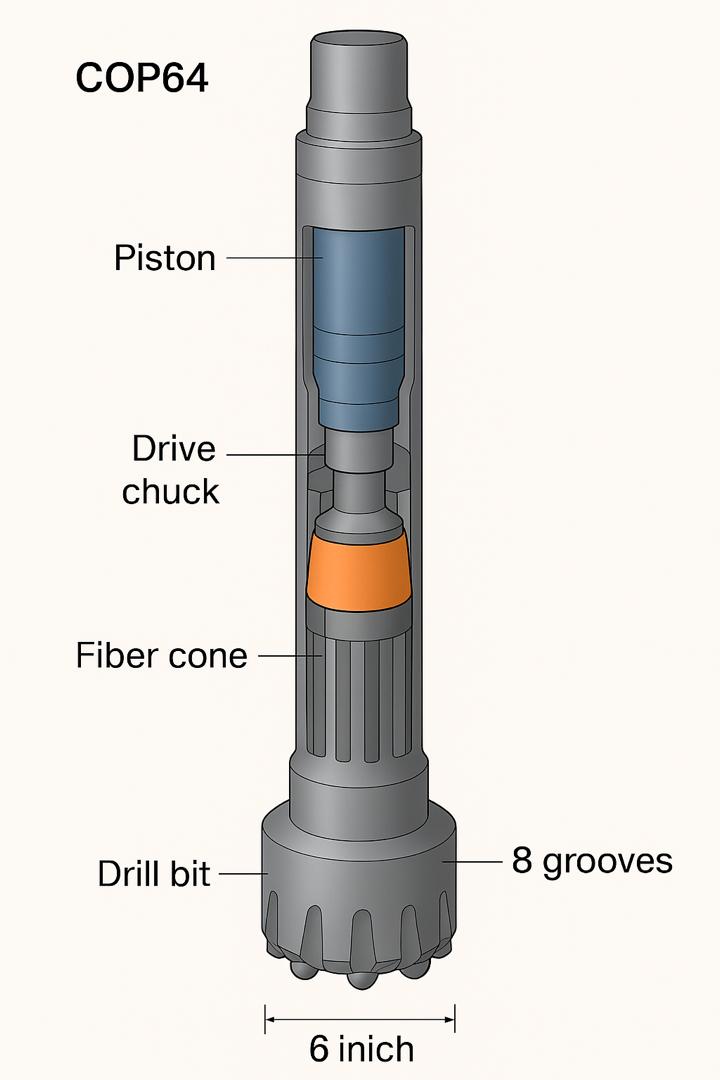
✔ Ensure proper hammer-bit matching
📈 The Result
Reducing button wear means:
✔ Longer bit life
✔ Lower cost per meter
✔ Higher drilling efficiency
✔ Less downtime
At Fasikon Drilling Tools, we focus on optimizing bit design, carbide quality, and system matching to ensure stable performance in demanding drilling conditions.
📩 If you’re facing excessive bit wear, let’s connect and find the right solution.
#DTHdrilling #DTHbits #RockDrilling #MiningEngineering #DrillingTools #WearAnalysis #Fasikon #MiningEquipment #DrillingEfficiency