DTH Drilling Performance: Why the Hammer Is Only Half of the Equation
DTH Drilling Performance: Why the Hammer Is Only Half of the Equation
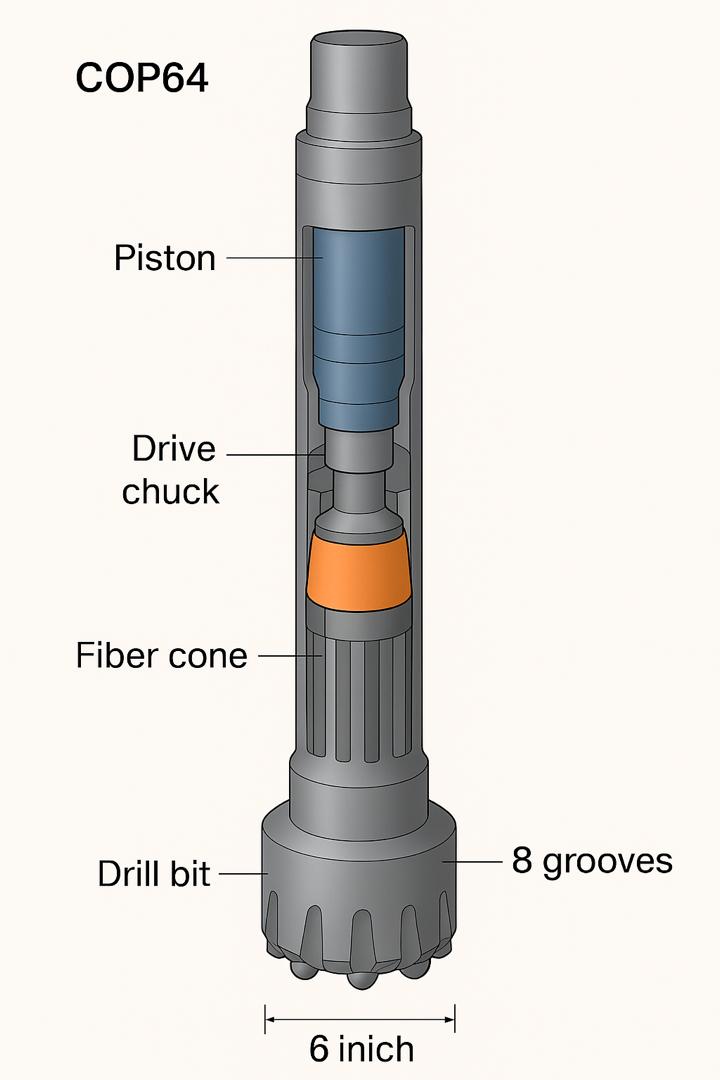
In DTH drilling, it is easy to focus on hammer size, bit diameter, or impact energy.
But in real drilling conditions, these parameters alone do not determine performance.
After working with DTH hammers and bits across different applications, I have found that drilling performance is the result of a system — not a single component.
The key relationship is:
Drilling Rig + Compressor + Hammer + Bit + Drill Pipe + Rock Formation + Operating Parameters
If one part of this system is mismatched, the performance of the entire drilling system can drop significantly.
1. Hammer size does not automatically mean higher productivity
A larger hammer can provide higher impact energy, but it also requires sufficient air volume and pressure.
For example, moving from a smaller DTH hammer to a 6″, 8″ or larger hammer without upgrading the air supply can create an unexpected problem:
The hammer becomes the bottleneck rather than the solution.
Insufficient air can lead to:
- Lower impact frequency
- Poor flushing
- Reduced penetration rate
- Higher risk of bit jamming
- Increased wear on internal components
This is why hammer selection should always start with the drilling system, not simply the hole diameter.
2. Bit design is equally important
The same hammer can perform very differently with different bit designs.
For DTH bits, several factors directly influence performance:
- Button geometry
- Carbide grade
- Face design
- Gauge protection
- Air-flow configuration
- Button distribution
- Rock formation
For example, a bit optimized for hard and abrasive rock may not be the best choice for fractured formations.
In hard rock, aggressive button placement can improve penetration.
But in highly fractured formations, excessive aggressiveness can sometimes increase button breakage and gauge wear.
The objective is not simply:
“Drill faster.”
It is:
“Achieve the best penetration rate with acceptable bit life and stable hole quality.”
3. Air flushing is often underestimated
One of the most overlooked factors in DTH drilling is flushing efficiency.
The compressed air has two jobs:
First: drive the hammer.
Second: remove cuttings from the hole.
If the flushing system cannot efficiently remove cuttings, the drilling efficiency can deteriorate even when the hammer itself is working correctly.
Poor flushing can result in:
- Regrinding of cuttings
- Reduced penetration
- Increased bit wear
- Higher energy consumption
- Hole cleaning problems
This becomes particularly important in deeper holes and larger diameters.
4. DTH vs RC: the application determines the tool
DTH and Reverse Circulation drilling are not simply two different hammer options.
They are different drilling systems designed for different objectives.
DTH is widely used where reliable rock penetration and hole construction are the primary requirements.
RC drilling, on the other hand, is particularly valuable when rapid sample recovery and geological information are critical.
For exploration projects, the drilling objective should therefore be considered before selecting the hammer.
The question is not:
“Which hammer is better?”
The better question is:
“Which drilling system is better for this geological and operational requirement?”
5. Compatibility matters more than the brand name
In international markets, we often see customers looking for compatibility with brands such as Atlas Copco, Sandvik or Mincon.
Compatibility is important.
But a compatible hammer should not simply mean that the thread or shank fits.
A proper compatibility assessment should consider:
- Shank geometry
- Thread connection
- Operating pressure
- Air consumption
- Impact mechanism
- Bit design
- Drill pipe configuration
- Rig capability
A hammer that physically fits the drill string does not necessarily mean it is the optimal engineering match.
6. How should a drilling contractor select a DTH system?
My practical approach is to start with six questions:
1. What is the hole diameter?
2. What is the expected drilling depth?
3. What type of rock are you drilling?
4. What compressor capacity and working pressure are available?
5. Is the priority penetration rate, bit life, or total drilling cost?
6. Is the application production drilling, water well drilling, mining, construction, or exploration?
Only after these questions are answered should the hammer and bit be selected.
The real KPI is not the price of one hammer or one bit
A drilling contractor does not ultimately buy a hammer.
They buy:
Meters drilled per operating hour.
And they care about:
Cost per meter.
A cheaper hammer with short service life may become more expensive.
A more aggressive bit may increase penetration rate but reduce bit life.
A high-performance hammer may be useless if the compressor cannot supply enough air.
Therefore, the most meaningful comparison is not:
Price per hammer
or
Price per bit
but:
Total drilling cost per meter.
That is where engineering and commercial decisions meet.
At Fasikon, our focus is not simply to provide a DTH hammer or bit.
The goal is to understand the complete drilling application and match the hammer, bit, air supply and rock conditions as a system.
Because in drilling:
The best tool is not necessarily the strongest tool.
It is the tool that delivers the lowest total cost per meter under real working conditions.
If you are working with DTH or RC drilling and would like to compare hammer/bit selection for a specific formation, hole diameter, compressor and rig setup, I would be happy to discuss the technical parameters.
#DTH #DTHDrilling #Mining #Drilling #RockDrilling #DTHHammer #DTHBit #ReverseCirculation #MiningEquipment #DrillingTools #Geotechnical #Exploration #CostPerMeter